


Mukhammad Salikh urges the West to support «a peaceful revolution» in Uzbekistan
Comments (0)
(photo: M. Salikh, 2005)
With help from the international community, the opposition in exile may be counted on to launch the democratic changes and economic reforms the Uzbek people is longing for. This is what Uzbek writer and politician Muhammad Salikh, Islam Karimov's enemy of old, is trying to convince the Western elite of. An ambitious politician, Salikh is determined to lead both the common people and representatives of the powers-that-be dissatisfied with Karimov's regime. Salikh's followers believe that he will succeed in orchestrating a "velvet revolution" like the ones that occurred in Georgia, Ukraine, and Kyrgyzstan. His enemies fear that the attempt to topple the regime may plunge the country in chaos by the Afghani or Iranian scenario.
Salikh whose real name is Salai Madaminov went in for politics in the early 1990's. A prominent poet commanding respect with intelligentsia and founder of the oppositionist Erk [Freedom] party, Salikh challenged Karimov and ran against him for president in 1992. Outpaced and outperformed, Salikh nevertheless demonstrated that he had substantial following in Uzbek society. Observers believe that precisely this fact compelled the president of Uzbekistan to "put the political screws" on the country.
"Games of democracy" in Uzbekistan ended in the middle of the 1990's. The regime shut dissenters up and drove all political activists either underground or out of the country. Criminal charges were pressed against Salikh himself, compelling him to move to Norway. Almost absolute oblivion back in Uzbekistan, infrequent articles in the liberal Western media, and publications on anti-Karimov web sites were all that awaited him in exile. Mysterious explosions in Tashkent in February 1999 were blamed on Salikh. As far as official Tashkent is concerned, Salikh is a criminal sentenced in absentia to 15 years imprisonment for organization of terrorist acts aiming to topple the legitimate regime.
Even though Uzbekistan "under Karimov" is off bounds for Salikh, the semi-forgotten Erk leader bid his time all these last several years. The politician in exile grew much more active in the wake of the events in Andizhan. Salikh moved his headquarters to Istanbul, Turkey, where he was visited by numerous dissenters and Erk activists and even by some former state officials whose alliance with Salikh seems thoroughly unlikely.
And so it went on. Salikh was officially invited to the United States for the first time in June 2005. He gave a briefing at the Columbian University. Salikh attended a series of meetings with senior British officials in January 2006. He delivered a speech at the Royal Institute also known as Chatham House and made a report at Policy Exchange (Institute of the Conservative Party). In a couple of weeks, in February, Salikh will visit Washington where talks with officials and experts of the US Administration are planned. In fact, Salikh invited other opposition activists to the forthcoming meeting with representatives of the American establishment.
Th poet-politician urges Western democracies to participate in Karimov's dethronement and promises to organize mass riots in Uzbekistan. "Nobody takes the word "revolution" as seriously as we do," Salikh was quoted as saying, "because nobody is aware of its necessity the way we are." Salikh's speeches in public are full of romantic calls for freedom for the Uzbek people and flowery phrases on the people's rights. In the meantime, he never says a word on what is to be done after the revolution, as though implying that everything will be fine and dandy by definition.
What part would the West have Salikh play? Will the method of the so called "velvet revolutions" do or will dictator Karimov's dethronement by peaceful means lead to chaos making Uzbekistan another Afghanistan or Iran? How popular is Salikh at this point? Is there someone among the Uzbek opposition who could consolidate the protesters both in the streets and in the corridors of power? Will Salikh do for the role of savior of the nation, another "Hamid Karzai" for the post-revolutionary Uzbekistan?
Ferghana.Ru news agency approached some prominent experts in Central Asia for comments.
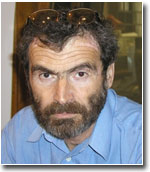 Arkady Dubnov, journalist specializing in Central Asia |
- The Uzbek political party Erk and the Islamic Party of Revival of Tajikistan are the oldest and, in my opinion, the best known brands of the Central Asian opposition. Muhammad Salikh does have a substantial open and covert (mostly covert) following in Uzbekistan. Even perhaps among the Uzbek elites (at the very least, this possibility should not be dismissed). Generally speaking, however, the Uzbek elite is fairly conservative and thoroughly disinclined to change the code of conduct in the clannish relations. I'm not convinced therefore that the elites will accept Salikh as one who belongs or that he will be given leave to participate in rearrangement [of spheres of influence] or amendment of the rules established long ago.
I believe therefore that Salikh's activeness at this point may be regarded as a catalyst of the actions, intentions, and resources of the Uzbek elite and Uzbek authorities with regard to reorganization of the system of power framework in search for the successor or, on the contrary, preservation of the status quo. It is precisely the fears that Salikh may become a formidable politician to be reckoned with that should be forcing official Tashkent to move in this direction.
As for the chances that Salikh may give in to the temptation to become an Uzbek Hamid Karzai - or even entertains the thought already - then the following should be pointed out. It will take the Talibs in the corridors of power in Uzbekistan or at least some semblance of the Taliban operating in the country for him to become an Uzbek Karzai who was elevated to the pinnacle of state power by triumph of the American military operation against the radical regime. I would not want anything that resembles what happened in Afghanistan to take place in Central Asia merely to promote another Karzai - not even when he is really a decent secular leader like Salikh (or at least like what he presents himself to be nowadays compared to what he was like, politically, 15 years ago).
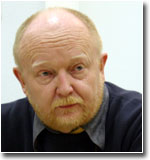 Aleksei Malashenko, member of the Scientific Council of the Moscow Carnegie Center, Professor of the Moscow State Institute of International Affairs |
Ferghana.Ru: Is there anyone in the Uzbek opposition who could consolidate the protesters?
Aleksei Malashenko: Shortly speaking: no. Neither do I think that anyone like that will appear in the foreseeable future.
Ferghana.Ru: What about Salikh?
Aleksei Malashenko: He won't do, and that's definite. I'm convinced that the era is over when he ran against Karimov and even polled a great deal of votes in the early 1990's. Moreover, it is over for good. He is out of sync, completely. Not because he is bad or something, because objective factors made it so. He was not given a chance to take root. I do not think that he may become even a symbol, much less an organizer of anything. In fact, let's take a broader view. Consider Rasul Guliyev in Azerbaijan who was never even permitted to deplane. Consider Kazhegeldin... Much as I regret to be saying it, but these people are history. In the meantime, I'm convinced that at least Salikh is a very interesting man.
Ferghana.Ru: What consequences, if any at all, shall we expect from Salikh's actions nowadays?
Aleksei Malashenko: I do not think that there will be any consequences at all. That's a storm in a teacup. The specialists in America who know what is happening in Uzbekistan... they will turn up and listen to Salikh, but it will change nothing. In any case, I doubt that any money will be raised for organization of revolutions by Salikh.
Ferghana.Ru: What about the so called "velvet revolutions"? Will this option do or will it but plunge the country in chaos and make it another Afghanistan or Iran?
Aleksei Malashenko: This is not where I would have started, you know. Because I just cannot perceive mobs protesting in Uzbekistan nowadays. I can imagine them in Ferghana only, and even so not right now. What happened in Andizhan shows plainly that dekhkans [peasants] and intelligentsia are not going to protest by the dozens of thousands - much less hundreds of thousands. There will only be some undercover fighting at best, fighting behind the curtains. This is where we may recall the head of the Interior Ministry or National Security Service or even someone else... In this undercover fighting they will use all sorts of pseudo-democratic (or rather quasi-democratic) personae and institutions, and even Islamists. I'd say that Islamic-Byzantine methods will be used rather than the so called Orange ones. Unless of course Karimov decided to remain at the helm for another five years causing mass protests on the part of the despaired people. Once again, however, Andizhan makes it plain that there will be no crowds protesting in the streets. After all, nobody protested in Namangan, Kokand, Margilan, of Ferghana when the massacre in Andizhan was under way. Everything was fine and dandy all over the rest of Uzbekistan.
Ferghana.Ru: Is peaceful transition to Western-type democracy possible in Central Asian countries?
Aleksei Malashenko: This is not the most pressing question, you know. There exist three positions on the matter. One of them is Russian. It boils down to this, "Forget democracy and go for stability instead!" That's understandable.
There are two positions in the West. One of them comes down to the following, "Hail democracy! Let's invest. After all, we did pull it off in Georgia," and so on. I'd say that this stand on the matter is evolving at this point. Not very firm in the first place, it is evolving in the direction of the Russian position nowadays. "Leave them alone. Let these regimes be. We will carefully push them towards modernization and do something and help whenever it is possible." As for counting on some Orange Revolutions precisely from the angle of democracy (not from the point of view of pro-Western orientation, but from that of democratic changes), I'd say that the West knows better.
I had a friend in America once, a man who specialized in Central Asia. He had coined a phrase a decade ago I myself used to quote afterwards. He said that US ambassadors and advisors working in Central Asia and trying to implant democracy there were like Soviet specialists in agriculture who had tried once to cultivate corn in Ethiopian deserts. As I see it, this position is strengthening nowadays. That's how the Americans behave with regard to the Turkmenbashi today, and I believe that this a correct attitude.
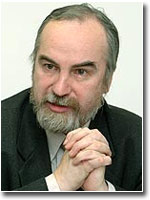 Azhdar Kurtov, President of the Moscow Center of Public Law Studies, a historian and political scientist |
"Salikh's speech in Great Britain caused a major stir in certain circles. Some observers assume that certain political circles in West Europe and America chose Salikh as the leader of the part of the Uzbek opposition these circles intend to elevate to power instead of the existing regime. How valid these assumptions are is difficult to say at this point. After all, Salikh's speech was a fairly commonplace event quite typical of Central Asian opposition groups. Most of them live and operate abroad and organize events like that to remind the general public of their existence.
On the other hand, the situation with Uzbekistan is unique. Tashkent refashioned its foreign policy last year, after the notorious events in Andizhan in May. Deterioration of the relations first with the United States and then with some EU countries led to the Cold War and restriction of contacts between the West and the Uzbek leadership. On the other hand, the Uzbek authorities ordered the American AF bases out of the country. Blows were exchanged in this manner. Previously reluctant to take an active part in the CIS or Organization of Eurasian Economic Cooperation, official Tashkent changed its mind. It quit the GUUAM and applied for membership in the Organization of Eurasian Economic Cooperation. That means serious and ambiguous changes in foreign policy indeed.
I'm not at all convinced that this strategic policy will be faithfully pursued from now on or that no escapade will follow. Still, Salikh's speech fits the overall picture. Some experts may actually believe that the United States will try to use this opposition leader as a Hamid Karzai, a politician in exile who may be put in charge of the new government if and when the existing Uzbek regime is toppled. In the meantime, I retain grave doubts concerning possibility of this dethronement.
The Afghani situation is completely different from the Uzbek one. As I see it, the Uzbek regime is quite sturdy. No matter what Salikh may be saying, he has not said anything convincing from my point of view. He said, for example, that he had in his possession information from secret services of an unidentified country indicating that the events in Andizhan had been orchestrated by the authorities themselves. He mentioned the nearly forgotten colonel notorious for his political and military operations on the territory of Tajikistan... In the meantime, he did not show any proof. It is the court that should contemplate all facts and decide on their validity. It has never been done.
For the time being, Salikh keeps on saying that elections of the new parliament and president will be organized within three months following Karimov's dethronement. And that things will settle down all by themselves after that. This Utopian point of view is typical of the Central Asian opposition and oppositions in other countries.
There is more to it than Karimov as such. The matter concerns the complicated problems the Republic of Uzbekistan is facing. These problems are not to be solved by a mere replacement of the man at the pinnacle of political power.
Novgorodtsev, a prominent Russian lawyer and philosopher, said in 1918 that when the liberal Russian intelligentsia had dethroned Emperor Nicholas II, it took the poison of socialism and, also importantly, the poison of populism. He was referring to the belief that the people is always ready, mature, and perfect, and that elimination of the old regime is the only thing that is needed for the people to launch dramatic reforms, and so on.
Novgorodtsev was a Constitutional Democrat. From that point of view, he reminds me of Salikh. These Constitutional Cadets comprised the best enlightened part of the liberal intelligentsia in Russia. In the meantime, it was precisely their efforts that enabled others, radicals, to benefit from this policy. Moreover, these radicals were never restricted by moral or any other limitations. I mean the Bolsheviks, of course.
Salikh, the man who once translated the works of outstanding French writers and philosophers and who challenged Karimov in the presidential race in the early 1990's, does not adequately perceive himself in his new capacity - that of a politician.
There were analogous episodes in the post-Soviet history when representatives of this liberal intelligentsia found themselves in the vortex of political life, when they found themselves elevated to the pinnacle of political power. Once there at the top, they frequently landed their respective countries in trouble.
It happened so in Georgia when Zviad Gamsakhurdia became the first president. It was under Gamsakhurdia that Georgia launched civil wars on the territories and ethnic groups that disagreed with the central authorities in Tbilisi. It was under Gamsakhurdia that the Georgian parliament was fired at. Boris Yeltsin was not the first CIS president to open fire on the national parliament in Russia in 1993. Gamsakhurdia was. How he ended we all know.
There are other examples as well. I remember the late 1980's and early 1990's, the period when Birlik and Erk were founded and began their actions in Uzbekistan. Salikh concentrated then on the matters like status of the Uzbek language and situation in agriculture where cotton was the only culture, and Russification of education and many other similar issues. Due to efforts of the intelligentsia, matters like that deteriorated into bloodshed in the Commonwealth all too frequently then. It happened so in Moldova, for example, where debates over the state language resulted in a cleavage and establishment of the Trans-Dniester Moldovan Republic. The conflict has never been settled.
Salikh the politician is not up to Salikh the man of letters, and that's inevitable. Max Weber wrote once that a politician will always be bested by a bureaucrat because the latter possesses information and is generally more skilful when it comes down to action. It follows that a tactful politician will always be bested by a cynic because the latter lacks the moral commitments Salikh has to honor (or at least I think that he has).
A poet and writer that he is, if Salikh opted to go in for politics, he will have to accept the rules and the logic of political wars. And fierce political wars (that they are fierce is undeniable because the matter concerns dethronement of Karimov and his regime, nothing less than that) compel politicians to seek allies. As for allies, in political wars they are sought in accordance with the principle "foe of my enemy is my friend". It is only logical and reasonable therefore for some representatives of the Uzbek authorities to suspect that Islamic radicals may become allies of the democratic part of the Uzbek intelligentsia. Like in 1917 I've already mentioned, these people will not hesitate to oust the liberal Uzbek intelligentsia when the time is ripe and seize the power. And that is precisely what I do not want because it will spell a lot of trouble for the whole region, and not only for Uzbekistan as such.
Moreover, Salikh is painting it way too rosy. He said for example that he knew of the episodes when security structures and law enforcement agencies disobeyed the central authorities in Uzbekistan. I do not know of any such episodes, and neither has the media reported anything.
Yes, some personnel changes have taken place. Almatov is out. Experts speculate on rearrangement of forces between the three major structures responsible for state security, internal affairs, and military defense. And yet, I do not think that the resources the Uzbek leadership has relied on all these years are expended. Neither has the situation reached the point where it could be branded as "revolutionary".
In the meantime, I would like to point out that Karimov's regime is not entirely incapable of reforms. Some radical changes in foreign and domestic policy did take place in the last six months. Some progress in the matter of promotion of free market economy was made. Life will show, of course, if the regime means business or if it is but another propagandistic trick.
And yet, I doubt that the population of Uzbekistan (all of it or at least a majority) is prepared to back the new opposition and specifically Salikh as he himself claims that it does. Sure, there is the United States and there is West Europe who may support it, but they are too far away. It will take more than their actions to replace a Central Asian regime. Moreover, the latest developments show that the United States promotes its objectives regardless of casualties or interests of the countries where it is bent on replacing the political regime. Iraq is a vivid example. More than two years of the military nightmare have failed to pacify this country.
I'd say that Salikh's speech will remain just that - a speech. There is nothing at this point that leads to the assumption that we are witnessing a new era in development of the opposition in Uzbekistan.