


Uzbek senators vote for liberalization of prosecution
Comments (0)
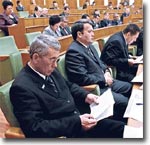
The tenth plenary meeting of the upper house of the parliament of Uzbekistan (June 29-30) endorsed a series of laws recently adopted by the lower house. The most important of them include the law on "Amendment of some standard acts of the Republic of Uzbekistan in connection with transition of the power to warrant arrests to courts" and "Amendment of some standard acts of the Republic of Uzbekistan in connection with abolition of capital punishment".
The former law greatly restricts the ability of the prosecutor's office to put citizens under pressure. The latter amends acting legislation in accordance with the forthcoming abolition of death sentence.
Capital punishment is to be abolished in Uzbekistan as of January 1, 2008. Moratorium on it in the meantime has never been invoked.
Abolition of capital punishment is something serious indeed. Very many (and human rights organizations among them) welcome it. Advocates of death sentence on the other hand view its abolition as abolition of fair punishment and the very principle of justice. In the meantime, all these debates are absolutely pointless in Uzbekistan as it is: what use is there in talking of justice when courts are appallingly corrupt and when judges do not hesitate to follow their orders given them by the powers-that-be? The situation being what it is, abolition of death sentence and its replacement with life imprisonment is a serious accomplishment and a progressive reform indeed
All shortcomings of the regime in Uzbekistan recognized and duly noted, its system of prosecution is being liberalized. The Uzbek Criminal Code specified capital punishment for 33 kinds of crime in the early 1990's (a legacy of the Soviet past). These days, the list of these crimes is down to only 2 and even that will change next year.
The law the Senate endorsed specifies amendment of the Criminal Code, Code of Penal Procedure, and Penal Code of the Republic of Uzbekistan. Capital punishment is to be replaced with life imprisonment and long-term imprisonment (over 20 but not more than 25 years).
The new law specifies that life imprisonment and long-term imprisonment are only to be applied to first degree murders and terrorism. Life imprisonment is not to be applied to women (gender privilege?), juveniles, and men over 60 years.
Men sentenced to life imprisonment will serve the first decade in special maximum security colonies. Once the first ten years are over, they may be transferred to ordinary colonies. After fifteen years, they may count on transfer to easy security colonies.
Life servers are to be permitted to make appeals after 25 years served, men sentenced to long-term imprisonment after 20 years. Good conduct, unblemished record, and active participation in life of the colony will only shave 5 years off the term. Needless to say, this provision offers wardens and prison administrations corruption opportunities too good to be missed.
Kyrgyzstan adopted similar laws (abolition of capital punishment and investment of the powers of the prosecutor's office in courts) the other day.
One other law endorsed by the upper house of the parliament should be mentioned - the one on "Amendment of standard acts of the Republic of Uzbekistan for the purpose of better efficiency of search in national telecommunications networks". Its content being a mystery, the title of the document merely indicates that someone will be hunted down. It is only known that networks' technical assistance to law enforcement agencies in their work is to be tax free.
The Senate passed a resolution changing composition of the Central Electoral Commission of the Republic of Uzbekistan.