


President of Kyrgyzstan gives the opposition a cause for new mass protests
Comments (0)
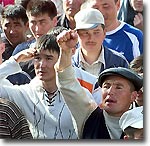
Experts warn that the outcome of the referendum will be questionable.
Knight's move
Kyrgyzstan has been unable to complete the constitutional reforms for three years now. Installed in March 2005, the new regime immediately proclaimed the intention to dismantle the "amoral" political system that had allowed Akayev to become a tyrant. The "dismantlement" began with the Constitution that invested so much power in Akayev and made Kyrgyzstan a super-presidential republic. The new regime launched the constitutional reform in spring 2005 but debates at the Constitutional Assembly ended with nothing to show for it and the draft constitutions were never offered for a referendum.
The mass rally the opposition staged in Bishkek in November 2006 forced President Kurmanbek Bakiyev to sign the Constitution drafted by the "constituent assembly" composed of deputies of the Jogorku Kenesh (national parliament). This Constitution restricted Bakiyev's powers and that was not something he would tolerate. The president persuaded Felix Kulov's government to resign in December 2006.
Once the government resigned, the president threatened the parliament into adoption of a new Constitution, one that restored his powers.
The Constitutional Court voided two previous constitutions in September 2007 and the country was left with the Constitution adopted in 2003. The opposition recognized the necessity of the constitutional reform. Addressing the nation on September 19, Bakiyev said a referendum would take place on October 21, to adopt the new Constitution and the Code of Election.
Time handicap
The Kyrgyz Central Electoral Commission met on September 21 to discuss the forthcoming referendum. Off the record, its members complain that they need more time to prepare the referendum properly.
District authorities are expected to form local electoral commissions by October 1. The Central Electoral Commission believes that the referendum will cost the budget $1.5 million.
Compilation of lists of voters is the pivotal nuance of preparations for the referendum. They are to be compiled by October 6 and made available to general public. At least 500,000 Kyrgyzes are Gastarbeiters in Russia and Kazakhstan (some specialists estimate them at one million - out of 2.5 million registered voters).
It follows that the lists of voters are going to be incorrect. They will inevitably include the people currently abroad, and that will allow for rigged results of the referendum.
When the parliamentary campaign was under way, lists of voters were more or less correct but only because candidates for deputies were interested in it. Nobody is interested in it anymore. Commissions are patently unable to compile correct lists by October 6. They will probably use the existing lists. The actual number of participants in the referendum will therefore be small. Loath to incur the wrath of the White House (this is how the government is colloquially known in Kyrgyzstan) that wants the presidential initiatives endorsed at the referendum, local electoral commissions will apparently rig the results.
On the other hand, the presidential administration itself does not mind incorrect lists because they will allow for falsification of the outcome. That is why the authorities turn the blind eye to the shortage of time for preparations and incorrect lists.
Outcome determined in advance?
Bakiyev in the meantime is confident of the outcome of the referendum or he would have never gone for it. The opposition will question validity of the outcome even should the presidential administration decide against the use of the administrative resource. The haste with which the authorities are organizing the referendum, its outcome, and the way the authorities are organizing it will inevitably give the opposition a cause to accuse the regime of falsifications and organize mass protests. Akayev's regime was toppled because political forces consolidated in the wake of the rigged parliamentary election. Dismayed by the failure of the rally in Bishkek this April, the opposition promised mass protests for this fall.