


Alisher Saipov's assassination: Let's face the truth!
Comments (0)
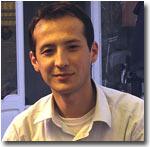
Osh journalist Alisher Saipov, Siyosat Chief Editor, was assassinated over a month ago. His murder stirred general public both in Kyrgyzstan and abroad. Numerous Kyrgyz and some Uzbek media outlets featured pieces written by the people sympathizing with Saipov and valuing him as a true friend and professional and by whoever hated him in all earnest.
Here is a piece by Vitaly Ponomarev, Director of Memorial's Central Asian Programs. A human rights activist, Ponomarev knew Saipov personally.
* * *
The crime has not been solved yet even though law enforcement agencies claim that they have identified suspects already and are looking for them. It seems that certain progress is being made indeed.
Press service of the Kyrgyz Interior Ministry called for "objectivity" from "media outlets, diplomatic missions, and civil society" the other day. Let us try to be objective then and analyze what is definitely known at this point.
The "Information" the Interior Ministry posted on its web site on October 31 is the only public document clarifying the official position. This hastily drawn document plainly reveals law enforcement agencies' determination to compromise the journalist and offers no hypotheses explaining the assassination.
Dismissing the minor incorrect facts the document is full of, let us consider its principal theses media outlets elaborated on afterwards.
1. The Interior Ministry claims that the journalist "allegedly met with Islamic Movement of Uzbekistan leader Tahir Yuldashev in Iran in April and/or My, 2007" and that he was "allegedly on Yuldashev's payroll".
The word "allegedly" is used twice. In other words, the Interior Ministry was not sure of the validity of this claim but published this information all the same. A single reference to this claim was made in the month that followed. Press service of the Interior Ministry announced on December 1, 2007, that leaders of the Islamic Movement of Uzbekistan including Yuldashev were in Iran "illegitimately, with forged documents" and that "information on the victim's contacts with leaders of the Islamic Movement of Uzbekistan hiding on the territory of the Islamic Republic of Iran was obtained within the framework of the investigation."
As a matter of fact, Saipov did not visit Iran in April or May this year, much less met with Yuldashev there. I know it from Saipov himself and from his friends. He visited Iran twice - in August 2005 and early September 2007. On both visits, he met with Uzbek immigrants, former activists of the Islamic Movement of Uzbekistan recognized as immigrants by the UN Directorate for Refugees living in Iran under local authorities' control. Ikbaljan Mirsaitov of the Kyrgyz Presidential International Institute of Strategic Studies accompanied Saipov to Iran in 2005 and results of this trip were reported at length by Ferghana.Ru. Assassination prevented Saipov from making a report on his second trip to this country.
With Saipov's passport in its possession, the Interior Ministry could easily establish whether or not he visited Iran this spring. Insistence on the "alleged" trip to Iran in April-May 2007 foments doubts in objectivity of the Interior Ministry.
2. The statement that Saipov "hid Kabul Parpiyev at his place after the events in Andijan and engineered his escape to Shymkent in Kazakhstan afterwards" is a lie. The foreign journalists who met with Parpiyev in Kazakhstan in summer 2005 know that he had found shelter in a town other than Osh. As for "escape" to Shymkent, it was anything but. Parpiyev was lured there by law enforcement agencies of several Central Asian countries in late 2005. Arrested immediately upon arrival, Parpiyev was quietly extradited to Uzbekistan and sentenced to imprisonment there. His arrest and imprisonment are officially confirmed (including by the Uzbek mission to the European Union) and the Kyrgyz Interior Ministry could not help knowing it. The phrase that Saipov "engineered Parpiyev's escape" is therefore a deliberate lie.
Where this whole assumption that Parpiyev had found shelter at Saipov's household originated in the first place? One of the Osh human rights activist offers the following explanation. In summer 2005, Saipov met with an officer of the Uzbek National Security Committee who offered him $10,000 for information on Parpiyev's whereabouts. In order to keep the officer talking, Saipov said Parpiyev was at his place. The journalist made a tape of this conversation and used it later (as the Interior Ministry would later mention). I haven't heard the tape, but if what the human rights activists said was true, it could explain appearance of the rumor. On the other hand, it does not justify the Interior Ministry in the use of the journalistic trick as a basis for a false accusation.
3. "Sensations" like discovery in the search of Saipov's newspaper office of NED loan financial documents, works by Muhammad Solikh, newspapers of the Democratic Party Erk (Uzbek opposition), or materials on Hizb-ut-Tahrir on hard disks may be viewed as incriminating only in a not-free society.
The "Information" released by the Interior Ministry includes another statement worth mentioning. The law enforcement agency claims that journalist Shakhida Tulaganova living in Great Britain nowadays made 13 (!) trips to Saipov in Osh to bring "flyers and funds" from the Uzbek opposition in Turkey.
Thirteen trips is surely too many - and expensive. The impression is that Tulaganova is a courier or someone with nothing better to do than make monthly trips to Kyrgyzstan with heaps of flyers and banknotes. I phoned her in London and asked if she had made 13 trips to Kyrgyzstan indeed. "No," she replied. "I visited Kyrgyzstan twice in 2005 and three times this year. I got the Kyrgyz visa on every occasion. That should be easy to check, you know."
I have no reason at all to question her words. I have a question to the Kyrgyz Interior Ministry instead: has it checked the data on these 13 trips before making the allegation?
I had but a brief talk with witness Ikbaljan Mirsaitov on October 25 morning. I had a lengthy talk with Tulaganova in London and with Osh journalists (including Siyosat staff) interrogated in the wake of Saipov assassination.
These conversations proved quite informative, particularly from the standpoint of clarification of the threats Saipov had received. Let us, however, concentrate on certain events and episodes that preceded the October 24 tragedy. (I will appreciate any new information on the matter, by the way.)
Two Uzbeks approached Saipov on October 20. They introduced themselves as vendors from Kokand and said they were looking for one Nabijon. This Nabijon, whoever he was, owed them money. "You will always find me in Osh. There is a journalist there by name of Alisher, and I'm his neighbor," they said he had told them. Saipov did not know any Nabijons and said so to the Uzbeks.
Strange phone calls to Saipov's cell phone began two days later. Some callers never said a word, others claimed they wanted to meet Saipov. A Siyosat journalist told me that these phone calls had visibly upset Saipov.
The same two Uzbeks accompanied by a local approached Saipov again on October 23. Saipov had a talk with them.
Two unidentified persons were seen standing watch near the Siyosat editorial office on October 24. The two people looked quite suspicious, so much suspicious in fact that one of the managers of the office nearby took their photo with his cell phone. The photo was turned over to the police when Saipov was murdered, but its existence was officially acknowledged only on December 5. A man on the photo was identified as one of the "Uzbeks from Kokand" who had visited Saipov.
Melis Turganbayev, Chief of the Organized Crime Department of the Kyrgyz Interior Ministry, said at the press conference on December 5 that neither of the two suspects was citizen of Kyrgyzstan.
When Saipov and Mirsaitov left the editorial office on October 24, two men passed them by. The journalist and his friend took them for "junkies". The assassin approached Saipov and opened fire a bit later...
It is a rare murder when the suspects are known to the police right away. Was it a pure coincidence? That and the fact that the weapon Saipov was assassinated with had already been used in Kyrgyzstan as the Interior Ministry would later announce? No need to venture guesses, particularly since owner of the weapon is reported as already detained. There is another nuance in this whole saga. Uzbek refugees in CIS countries hunted down by secret services regularly complain of strange phone calls.
It should be mentioned as well that Siyosat was not the only structure that encountered strange visitors in this autumn. Staff of the British IWPR office in Osh received some strange visitors too. "Strangers used to come here and start asking where they could find some organization," a journalist said. "We gave them the directions but they wouldn't leave, they'd hang around. Several visits like that and we decided to move the office elsewhere."
Also importantly, for months preceding Saipov's assassination Uzbek media outlets had carried out a campaign where the journalist was blamed for endeavoring to undermine the constitutional regime and inflame ethnic hatred, for participation "in production and proliferation of subversive literature, contacts with leaders of the outlawed Islamic Movement of Uzbekistan and Hizb-ut-Tahrir. Saipov was even accused of subversive activity. [All these materials are available on Ferghana.Ru web site.] These accusations repeat essentially word for word articles of the Uzbek Criminal Code. As for "diversants", both genuine and otherwise, Uzbek secret services never hesitate to take them out.
In short, the so called Uzbek hypothesis is not as groundless as it is presented.
Some Kyrgyz journalists who denounce this hypothesis maintain that the Uzbek National Security Committee never kills anyone. Unfortunately, it does. At least several episodes are known (some of them in the Ferghana Valley) when officers of the Uzbek National Security Committee murdered suspects and dumped the bodies into rivers. Or else, the National Security Committee hires criminals to deal with dissenters. (There is a film showing one such criminal who approached journalistic and human rights organizations in Alma-Ata in December 2005.) It is known as well that Uzbek law enforcement agencies did try to have opposition leader Solikh assassinated abroad several years ago.
I was told by a trustworthy source in Bishkek in late November that Kyrgyz secret services possessed information confirming its Uzbek analog's involvement in the assassination. I'm not going to elaborate on it for two reasons. First, it may compromise the source. Second, it is impossible to use this information as proof that will stand in court.
For the time being, Kyrgyz media outlets admit that "the Uzbek connection" is one of the hypotheses the investigation ponders.
Behavior of Kyrgyz law enforcement agencies in the wake of Saipov's assassination was bizarre. Numerous journalists were interrogated in connection with the assassination, some of them quite rigorously.
According to a Siyosat journalist, the interrogators were mostly interested in Saipov's contacts with Hizb-ut-Tahrir and his business activities. The impression was that the investigation was not interested in anything else.
The computers, other equipment, and documents confiscated right after the assassination on October 24 - without the warrant, that is - have never been returned to Siyosat.
Homes of Siyosat journalists Davron Nasibhanov and Ganijon Holmatov were searched on October 27. Law enforcement agencies claimed they were looking for "Hizb-ut-Tahrir flyers". The searches produced nothing incriminating.
Tulaganova encountered problems when she was leaving Kyrgyzstan for Great Britain that same morning. She said she had been put on the black list the day before and had to make a formal appeal to the British Embassy in Alma-Ata and US Embassy in Bishkek. A lieutenant colonel of the police told Tulaganova in Manas that she could not leave the country because there were some points that had to be clarified and asked the journalist to accompany him to the Interior Ministry building. The officer had no documents validating the ban to the journalist to leave the country. When officials of British and US embassies turned up, he gave in and asked Tulaganova questions right in the airport terminal. "Everything I knew I had told the police in Osh during the 3.5 hour long interrogation there," Tulaganova said. "Judging by his questions, the officer did not really know what to ask..." An officer (probably of the border guards) was present at the interrogation and so was another plainclothesman. This latter wouldn't introduce himself and the journalist took him for an Uzbek. She was upset to hear him mention in passing that he had known about her in connection with "our Ferghana investigations". An hour and a half later the lieutenant colonel phoned his superiors and Tulaganova was permitted to leave the country.
Mezon-TV network in Osh ran a program in memory of Saipov on October 28. The following morning author of the program Hulkar Isamova and Mezon-TV Director Javlon Mirzahojayev were summoned to Osh Police Chief Rustam Murzatov. According to Isamova, the dressing down took place in the presence of Murzatov's deputies, chief of the criminal police, chief of the drug enforcement department, chief of the department dealing with religious extremism, and other senior officers. Murzatov seethed that the program the previous night had shown "Alisher as a decent man and a professional." "You're interfering with the investigation," the top cop screamed at Isamova and Mirzahojayev. "You creating a positive image without even knowing what kind of person he was and what he was involved in." As it turned out, Murzatov had not seen the program. It did not, however, prevent him from ordering one of his underlings in the journalists' presence to "Find out who sponsors Mezon-TV. Scan the program, find corpus delicti and press charges." The episode became public knowledge which apparently spared Mezon-TV criminal charges. Its problems, however, did not end.
It was two days later that the Interior Ministry of Kyrgyzstan released its false "Information".
There would have been no point in describing it all but for a certain nuance. Atmosphere of fear is being fomented in the southern part of Kyrgyzstan. Even I felt it on my brief visit there in November. The methods Kyrgyz law enforcement agencies deploy are best characterized by the following episode. Following my press conference in Bishkek where I had aired my views on Saipov's assassination, Isamova was summoned to her superiors and informed that "this human rights activist Ponomarev" she had had a talk with had come to Osh to meet with Elmurad and Abbas, "wanted criminals preparing terrorist acts in Osh." The journalist was even told that Kyrgyz secret services had filmed the meeting.
I did meet with IWPR journalists by names of Elmurad and Abbas. One of them is a resident of Osh, the other a refugee from Uzbekistan. Not one of them is a criminal, wanted by law enforcement agencies or not. When we were talking in a cafe, one of them identified men at the table nearby as officers of the local police.
It seems that Kyrgyz "law enforcement agencies" - if that is what they are - wouldn't rest with blaming Saipov alone as a terrorist. They are now investigating "terrorist acts" engineered by Russian human rights activists and British journalists. This whole idea is as bizarre as some of the hypotheses 24.kg news agency claims as being investigated nowadays. The matter concerns the hypotheses that the journalist was assassinated by followers of the Uzbek Democratic Party Erk or members of Hizb-ut-Tahrir. The impression is that some of these hypotheses originated in Uzbekistan.
Here is another weird report to the effect that "the Kyrgyz police are running down one Nosir Zokir [a prominent human rights activist and journalist from Namangan] in connection with the murder of Saipov" (24.kg reported it on December 12). I phoned Zokir in Namangan and asked if he had been interrogated by Uzbek or Kyrgyz secret services. "No," he said. "Nobody came with any questions. On the other hand, there are two cars on surveillance duty outside my place today instead of the usual one."
As a matter of fact, Tashkent has one other "sensational" hypothesis to investigate. According to it, Saipov was terminated by US secret services (Press-uz.infor news agency, October 30).
Hakimjon Halilov of the Namangan Justice Directorate in the meantime demands a "legal assessment" of my statements in Bishkek in accordance with the criminal code (Press-uz.infor news agency, December 4). All he has to do now is demand that Bishkek amend the Kyrgyz Constitution by Uzbek standards.
He that commits a fault thinks that everyone speaks of it. This old axiom certainly applies to this whole absurdity.
Forget Uzbek officials who only say what they are permitted to. Let us hope instead that the Kyrgyz Interior Ministry will run an internal investigation and prosecute whoever is speculating on the people's fear of terrorism. The Kyrgyz leadership had better realize that it is not journalists and human rights activists who pose a threat to national security, that a much more immediate threat is posed by secret services of the nearby totalitarian regime.
When I was meeting with the acting head of Kyrgyz state Kurmanbek Bakiyev over two years ago, I mentioned the problem of Uzbek secret services' unlawful activities on the territory of Kyrgyzstan. "Akayev was a weak ruler," Bakiyev confidently said. "Nothing like that is going to happen while I'm in charge." Time to keep the promise.