


Academician Bekdjan Tashmukhammedov: Rainfall control may double Uzbekistan's water resources
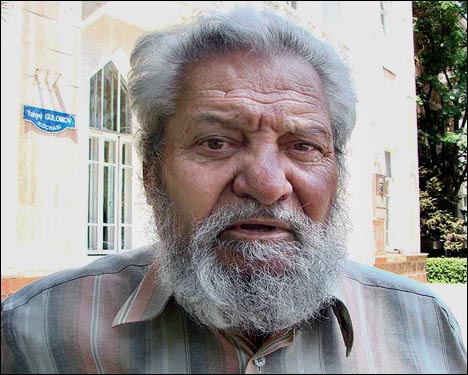
Professor Bekdjan Oibekovich Tashmukhammedov is the head of the Physics of Membranes Laboratory at the Institute of Physiology and Biophysics of the Uzbek Academy of Sciences. Chairman of the MAB UNESCO National Committee, Professor Tashmukhammedov actively promotes radically sophisticated solutions to the water, land, and food problems Uzbekistan and its Central Asian neighbors are facing. For instance, Tashmukhammedov invited geneticist Norio Murat of the Biology Institute (Nagoya, Japan) to Tashkent in 2004 and suggested the cultivation of gene-modified rice and vegetables with modified seaweed genes to plant on the saline lands of Uzbekistan.
Uzbekistan has raised no official objections, so far, to construction of the Koksarai water reservoir on the Syrdarja River in Kazakhstan, which began on June 26, 2008. Uzbek ecologists, however, do become upset when thinking about the effect the reservoir may have on filling the Aidar-Arnasai lake system, as well as on the climate of the Tashkent region.
Ferghana.Ru news agency approached Tashmukhammedov for comment. The academician denied the existence of any particular threats to the Uzbek environment from the planned water reservoir in Kazakhstan. Further, Tashmukhammedov suggested rainfall control as a means of dealing with shortages of water in the Syrdarja basin, the problem affecting all countries of the region.
Ferghana.Ru: How come Uzbek scientists and experts never object to construction of the Koksarai water reservoir (actually, a compensating reservoir)? When the decision to build it was considered in Kazakhstan itself, Anatoly Ryabtsev of the Water Economy Committee of the Kazakh Agricultural Ministry advanced the idea that neighbors of Kazakhstan might raise objections because the project would restrict water drainage from the Shardarja water reservoir to the Aidar-Arnasai lake system...
Bekdjan Tashmukhammedov: Kazakhstan has no other options left. In fact, the water reservoir in question will only have an insignificant impact on the ecological situation in Uzbekistan. It is being built much lower on the Syrdarja than the Shardarja water reservoir and will, therefore, receive surplus water from winter floods. Filling the Shardarja water reservoir, the floods will, therefore, be deprived of much of their destructive force. The governments of Uzbekistan and Kazakhstan will hopefully reach an agreement to keep up annual "sanitary" water drainage from Shardary to the Arnasai Valley, necessary for the ecological balance of the Aidar-Arnasai lake system.
Our neighbors were always cooperative in the past in the matter of emergency surplus releases of water that enabled Kazakhstan to cope with the consequences of winter floods. Suspension of the regular release of water from Shardary to Arnasai, beyond the established norms, will stop the flooding of the Aidarkul that makes the lake system ecologically unstable. Submergence of shores and banks and a rise of the ground water level in Uzbekistan cost it thousands of hectares of pastures. Instead of wasting time and effort to prevent overfilling of the Aidarkul, we will, instead, be able to concentrate on stabilization and the rational use of this unique body of water.
Ferghana.Ru: The Koksarai water reservoir will be only 5.5 meters deep, its surface area will be 466 square kilometers. What about evaporation, then? Will it have any negative effect on the climate in Tashkent and its environs? Ecologists say that with the huge water tables of Aidarkul, Arnasai, Shardary, and Koksarai the climate in Tashkent is already becoming "seaside climate". Summer here is nearly five months long. Does it mean that the capital of Uzbekistan should expect to swelter in scorching heat between May and October?
|
The flat water, whose surface totals 2,175 square kilometers, stabilized into an anthropogenesis ecological system that alleviated consequences of the drying up of the Aral Sea. Advised by the UN and the Global Ecological Foundation, the government of Uzbekistan established the Nuratau-Kyzylkum reservation on the shores of the lakes.
Surplus releases of water from the Shardary to Arnasai in winter floods resumed in the late 1990s and promptly overfilled the lake system. Area surface of the lake system reached 3,175 square kilometers by 2004.
Some ecologists claim that the breach of the western, extremely salinated, part of Aidarkul and its ensuing drying up will push almost 1 million tons of acidic salts into the atmosphere. It will have a thoroughly negative effect on cotton crops and facilitate the thaw of the Tien Shan ice caps. Others point out that fluctuations of the ground water level in the lake system may bring sulfur-filled hydrogen up to the surface (they are generated by decay of flora on the submerged shores).
Specialists have been working on the project of a drainage channel from the western end of Aidarkul since 2004. Others were assigned, then, to come up with ideas for what was to be done to stabilize the system when the drainage from the Syrdarja to Arnasai stopped.
Expert Nikolai Golelkin claims that 1.5 cubic kilometers is all the annual drainage the Aidar-Arnasai ecological system needs to retain its stability. Even without drainage from Shardary, however, the lakes will retain their ecological importance for another four decades.