


Uzbekistan: Museum director’s removal unwarranted and sinister!
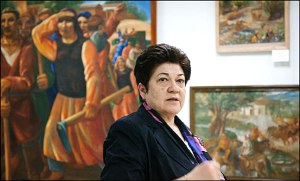
Photo © Timur Karpov/Fergana
The director of the legendary Savitsky Art Museum in Nukus, Karakalpakstan, Marinika Babanazarova, was recently fired; no new director has been appointed yet. Ms Babanazarova’s colleagues and friends are collecting signatures and writing letters in protest to the government and president of Uzbekistan, demanding to resolve the problem and recall the order of her dismissal. Meanwhile, experts abroad are seriously concerned about the fate of a rich collection at the museum, which is now left exposed without that one person who has at the helms for 30 years and secured a globally renowned status for the museum.
The Savitsky Museum
I will refrain from writing again about what the Savitsky Museum in Nukus is, given the thousands of pieces already written. You can familiarise yourself with entries in Wikipedia or the museum’s website, and Fergana (The Nukus Museum: Arts Treasure Chest in Prolonged Trouble Epicentre). I will only say that it is one of the most wonderful museums in the post-Soviet space, which houses some 90,000 exhibits ranging from ancient arts to middle ages to the modernity.
Experts of the field estimate that the significance and scale of the Russian avant-garde collection in Nukus is second to only the richest collection in Russkiy Muzey [The Russian Museum] in Sankt-Petersburg, Russia.
The most important aspect is that Igor Savitsky, the museum founder and first director, saved from destruction and collected into a state collection some of the rarest works of art of the early Soviet era, including many paintings of contemporaries and students of Malevich, Kandinsky and Shagal, the works of renowned Usto Mumin and Aleksandr Volkov as well as the works of Yevgeniy Lysenko, an artist not know in Russia until recently, and Mikhail Kurzin, one of the leaders of the Turkestan avant-garde. Thousands and thousands of paintings held in the Savitsky Museum archives are still awaiting discovery, comprehensive restoration and recognition.
Although the museum was founded in 1966, it gained significant fame much later—after the former USSR collapsed in early 1990s. Exhibits of its archives were displayed in many countries in the 1990s and 2000s, and stirred excitement among common visitors and sophisticated arts experts.
Collecting such unique works and paintings was not enough—safeguarding and carrying it through decades was of no lesser importance. Doing so was possible thanks mostly to the second director of the museum—Marinika Maratovna Babanazarova.
The student, director
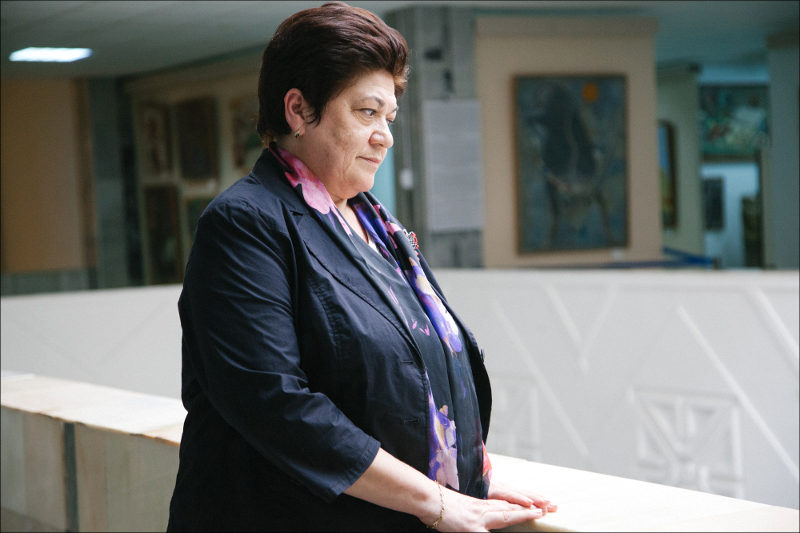
Marinika Babanazarova
Ms Babanazarova is a student and successor of Igor Savitsky. She worked for the museum in the times of late Savitsky and was appointed director after his death, in line with his decree, in 1984. The museum gained its jokingly serious nickname—The Louvre in Desert—under her leadership.
Being a leader at any level is a challenging and risky affair in Uzbekistan. But Ms Babanazarova had always been a more independent director unlike the majority of her peers. She did not look back to see what those in Tashkent had to say regarding this or that matter; she launched and supervised activities and hired employees herself; she would make agreements on exhibitions and seek sponsors/donors herself, most of whom, obviously, were foreign.
Powers that be in civilized—albeit not very democratic—nations like Uzbekistan pay close attention to museums. They cherish art so much, that paintings once held in Uzbek museums surfaced in private estates of high-ranking officials. For instance, when an exiled Uzbek activist in Switzerland, temporarily seized control over a Geneva villa owned by Gulnara Karimova, the Uzbek president’s beleaguered elder daughter, several canvases of Uzbek masters of art where discovered there. While no information is available as to what happened to them thereafter, some people back in Uzbekistan did get penalised: several employees of the State Museum of Arts were convicted for purported replacement of originals with forged copies and illegally selling paintings from museum collections.
Some reports suggested inspections were then unleashed in every single museum in Uzbekistan. However, no information on missing works or other violations was made available. At the same time, experts that are well aware of workplace etiquette and manners in Nukus are certain that not even a single piece of art could be lost under the relentless watch of selfless Babanazarova.
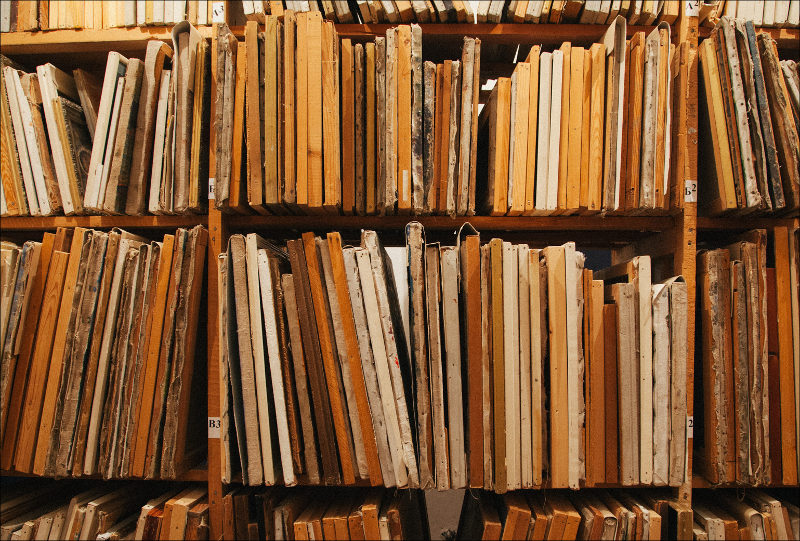
The Savitsky Museum archives
Dishonest inspections
The Savitsky Museum was subjected to various inspections every year. No official documents on the findings were released—and that’s how opaque social processes in Uzbekistan are—and no shortcomings in Ms Babanazarova’s work were identified. However, the last ambiguous inspection, which is still on-going and no official findings were released as of yet, has allegedly identified forged works in the museum’s collections and “violations of the collection’s integrity.”
“We witnessed the high level of security for all of the museum collection. Guards checked the contents of our bags, we were never left alone with the artefacts, and the curators put a fresh wax seal over the lock each evening.”
Richardson said there were now fears that the Savitsky collection would be relocated to the Uzbek capital Tashkent, allegedly for its own safety. “Some of it may go to museums but we suspect a lot more will quietly ‘disappear’,” she added.
The Guardian, 26 August 2015